The Security Monitoring Stack Every Startup Should Have
Even if you have zero security engineers
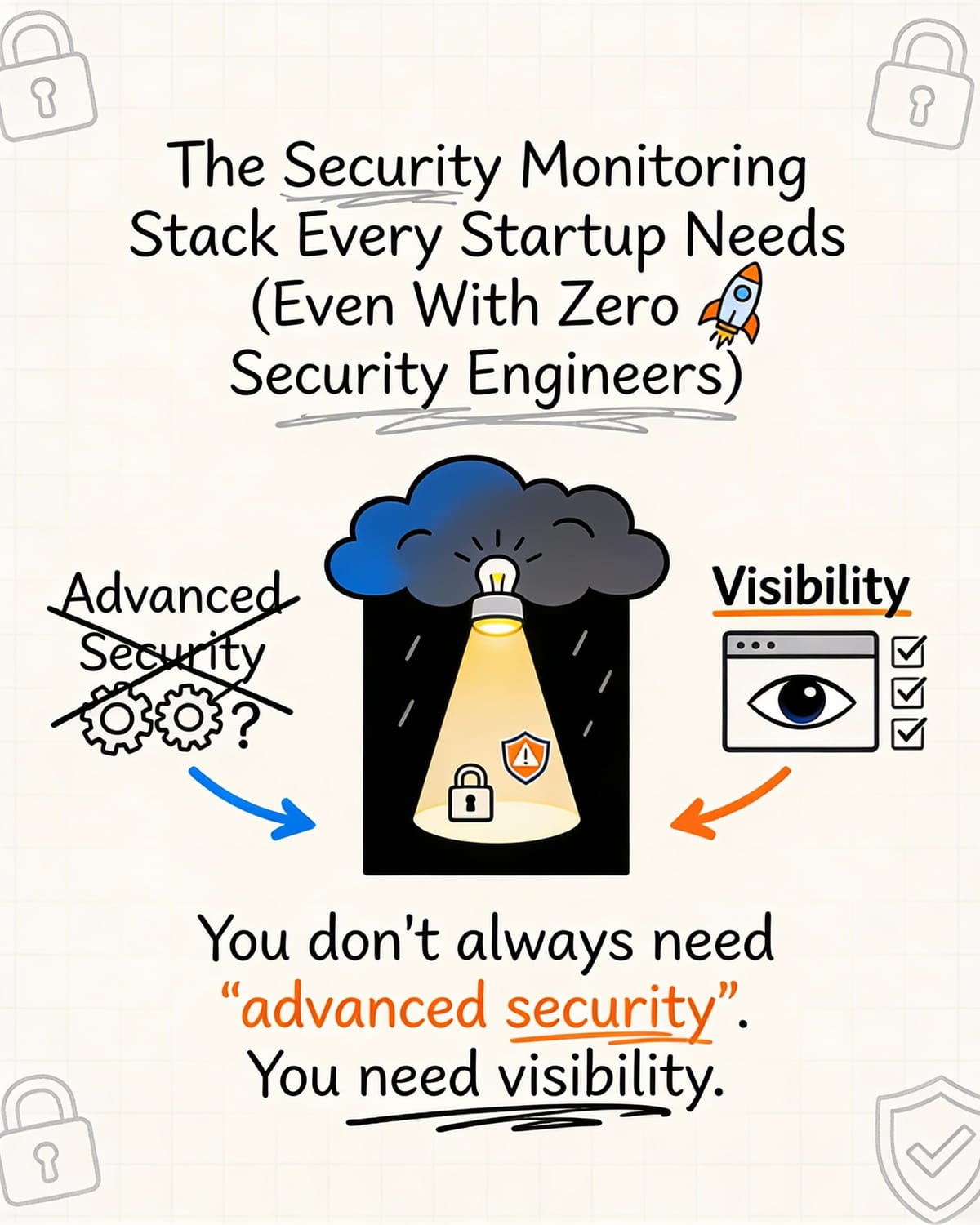
You do not need advanced security to survive early-stage threats.
You need visibility.
Most startups get breached or disrupted not because attackers are sophisticated, but because no one was watching.
Why security monitoring actually matters
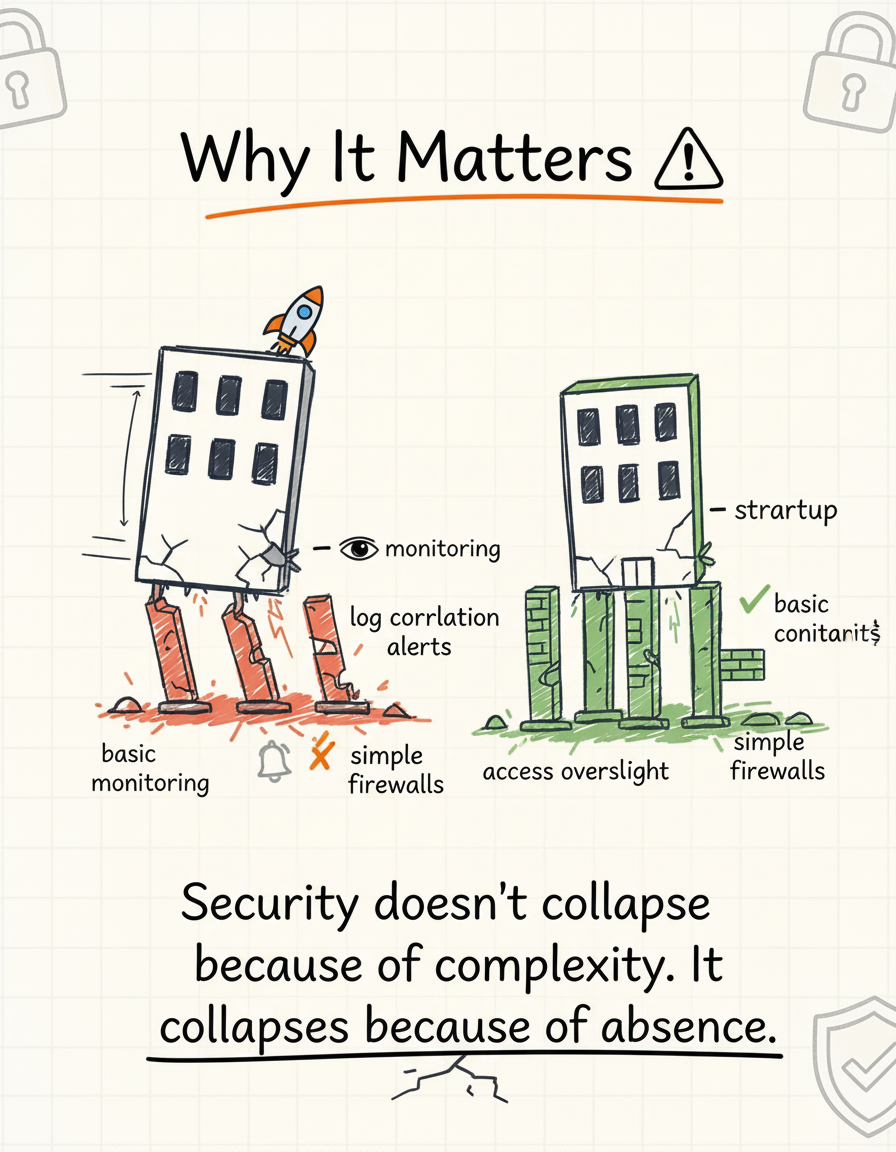
Startups usually fail at security in the most basic ways.
They lack:
- baseline monitoring
- log correlation
- anomaly alerts
- access oversight
- simple perimeter controls
Security does not collapse because systems are complex.
It collapses because nothing is in place at all.
A minimal stack that actually works
You do not need dozens of tools.
You need a few that cover different layers.
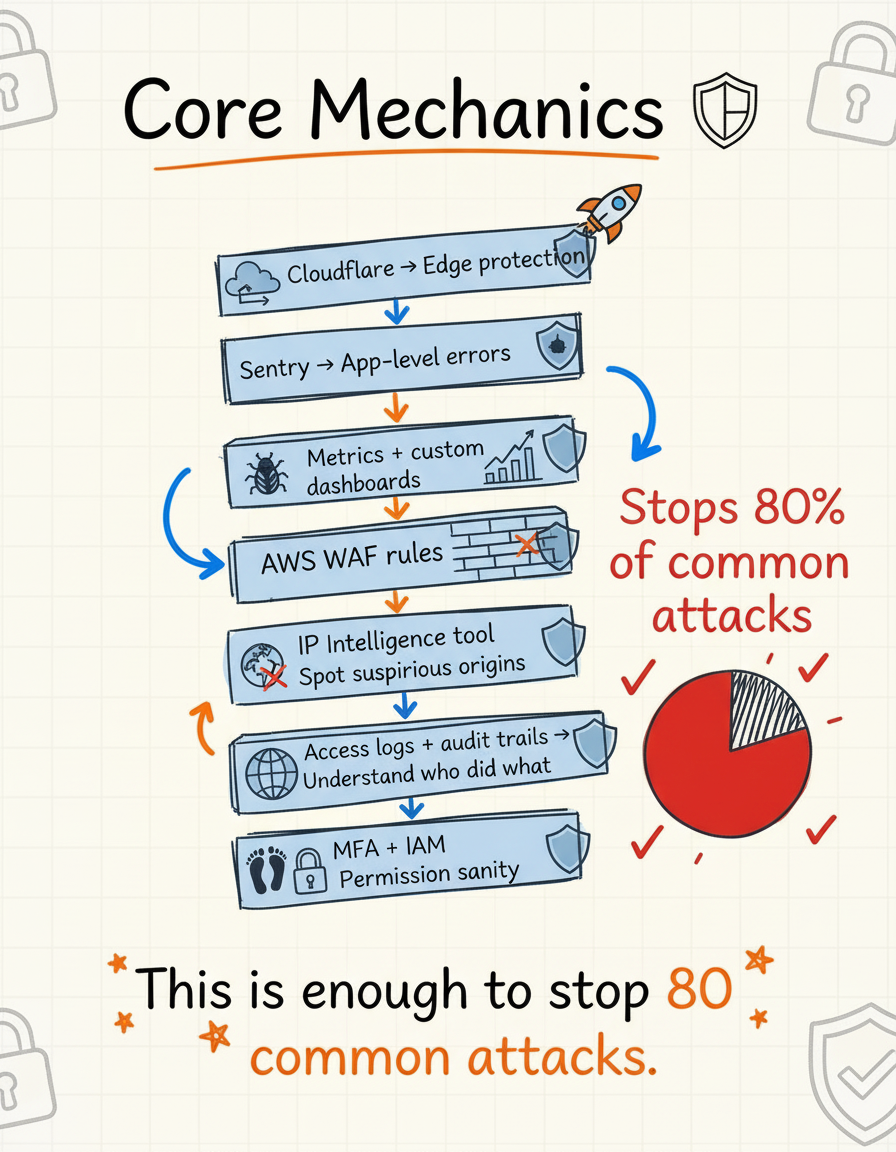
A high-impact starter stack looks like this:
- Cloudflare for edge protection and traffic filtering
- Sentry for application-level errors and crashes
- Grafana for metrics and custom dashboards
- AWS WAF rules to block known bad patterns
- IP intelligence tooling to spot suspicious origins
- access logs and audit trails to understand who did what
- MFA and IAM to keep permissions sane
This setup alone stops roughly 80 percent of common attacks.
Not by being clever.
By being present.
What good monitoring gives you
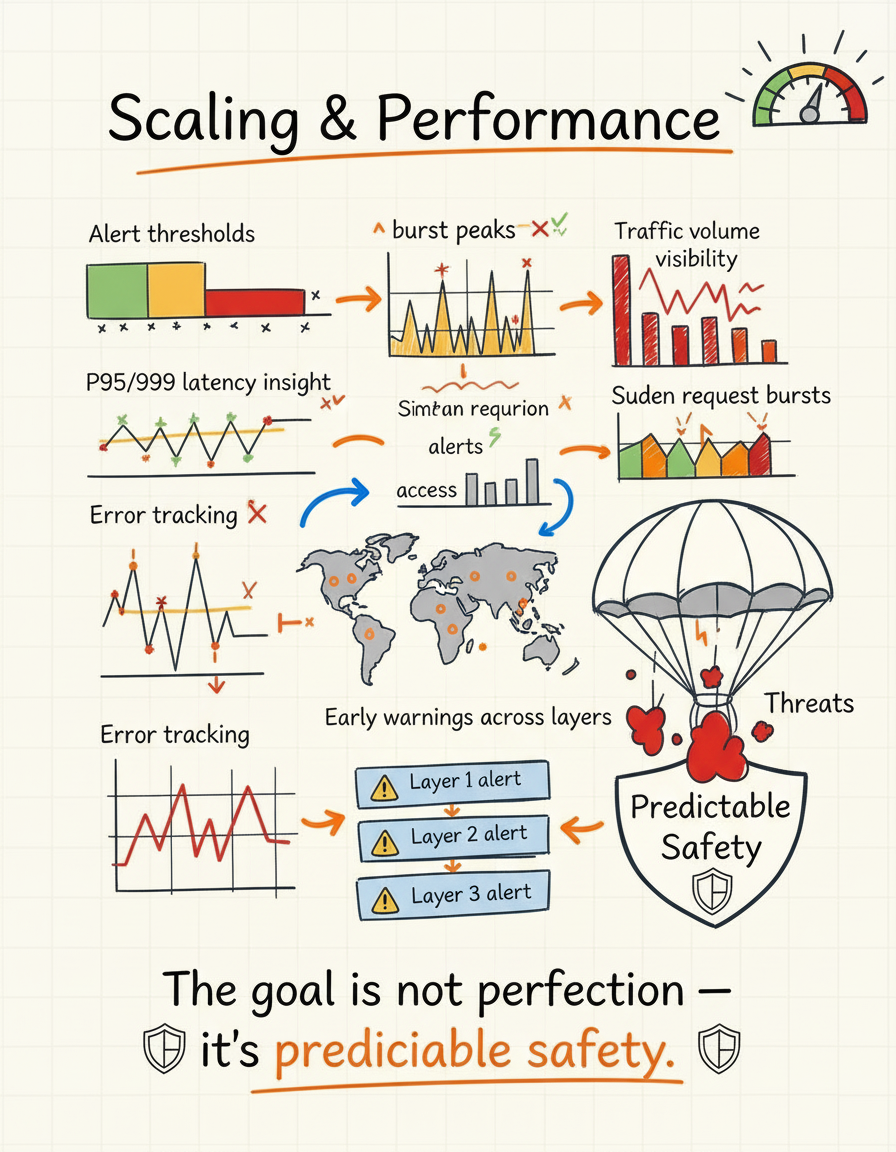
A healthy security stack provides early signals, not panic.
You should be able to see:
- alert thresholds being crossed
- p95 and p99 latency shifts
- rising error rates
- unusual traffic volume changes
- sudden request bursts
- suspicious region or ASN patterns
- correlated issues across layers
The goal is not perfect security.
The goal is predictable safety.
How security actually scales in startups
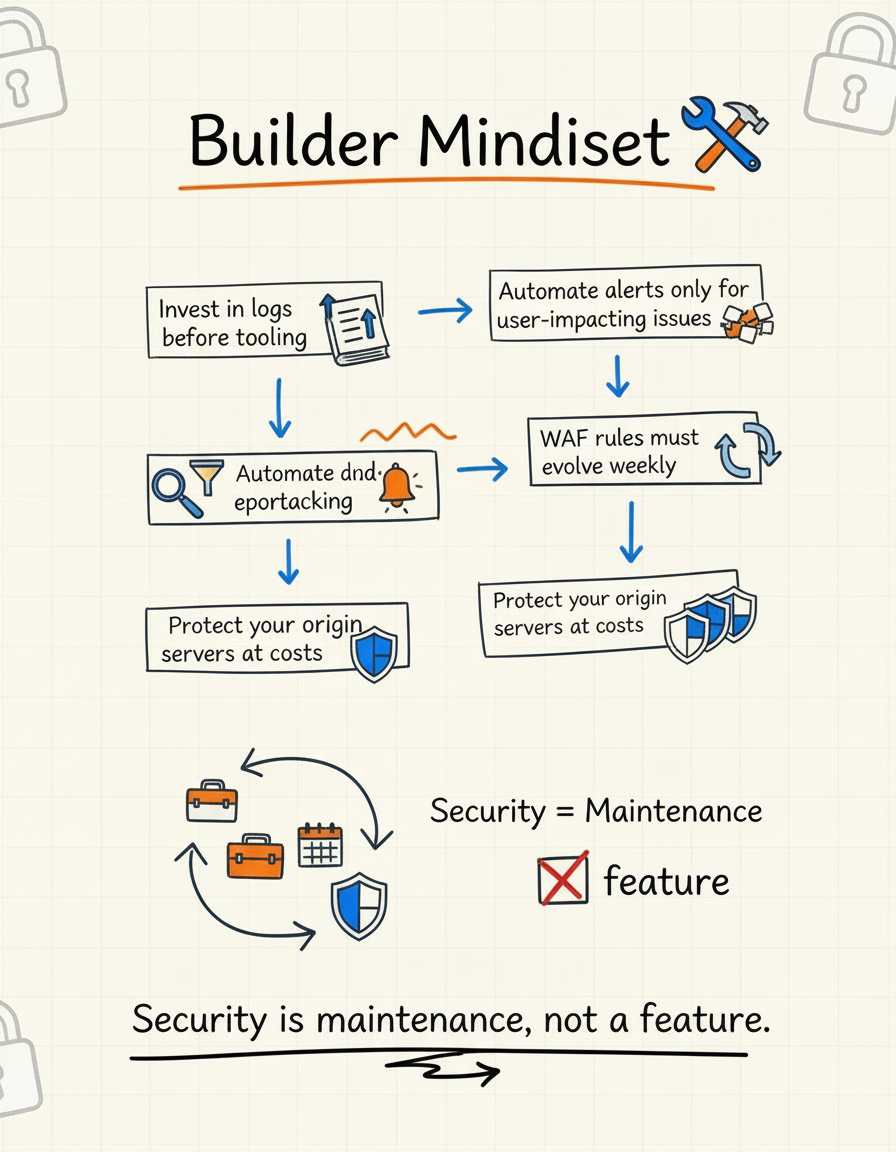
Security scales when it is treated like maintenance.
From real-world setups, these rules matter:
- invest in logs before fancy tools
- alert only on issues that impact users
- evolve WAF rules weekly, not yearly
- track traffic fingerprints over time
- protect origin servers aggressively
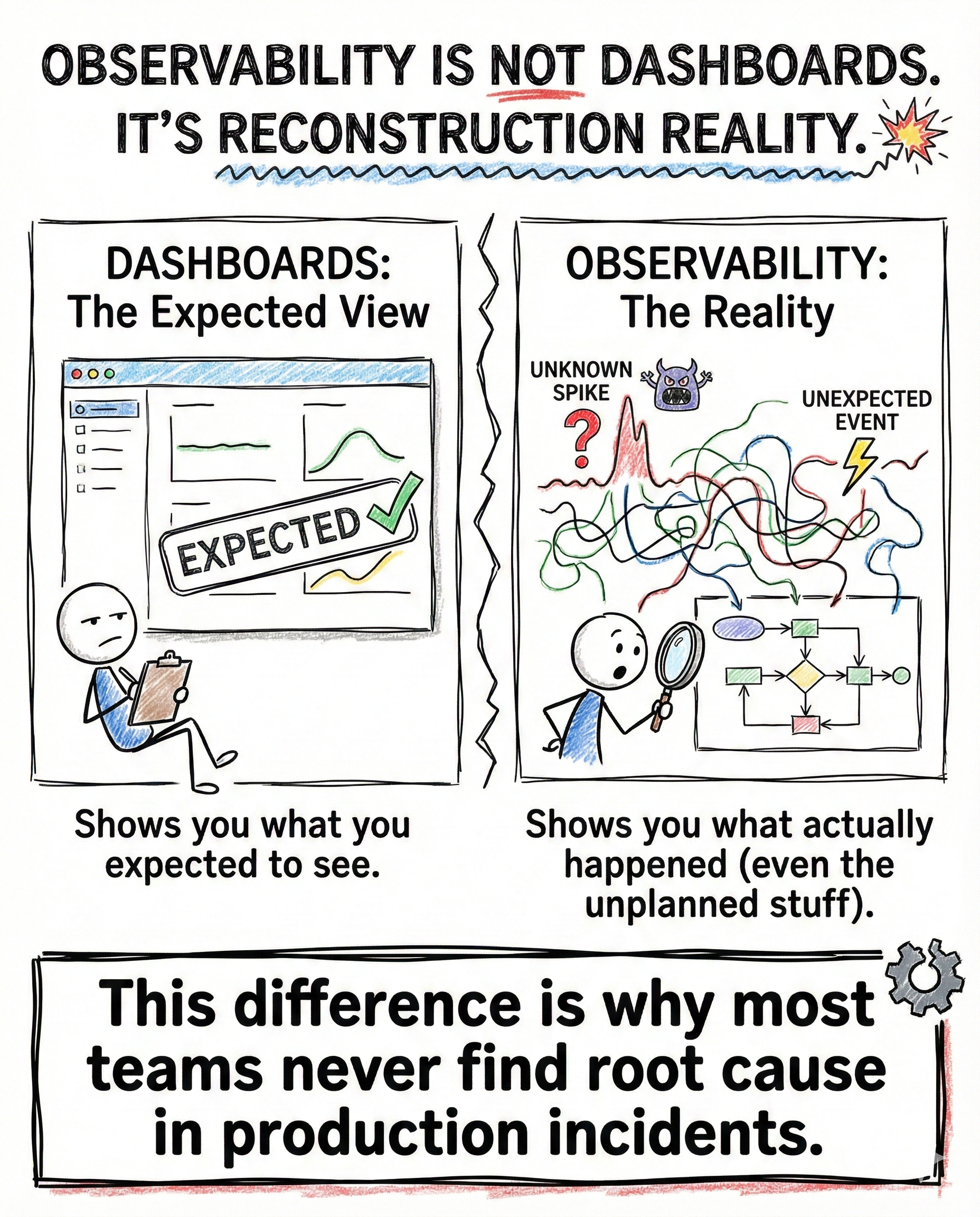
- never confuse uptime with safety
A green uptime graph can still hide active abuse.
The real takeaway
Security is not a feature you ship once.
It is a system you maintain continuously.
When visibility exists, problems surface early.
When it does not, incidents arrive fully formed.
Closing
This post is part of InsideTheStack, focused on simple, practical security architecture that works for real startups.
Follow along for more.
#InsideTheStack #SecurityStack #Startups